Rhythm games have always had a special place in my heart. It’s one of the rare times in gaming where syncopation meets execution, and the backing instrumentation becomes an extension of your own will. It’s an experience I can never get enough of, which is why I’m hitting the upbeat and sharing a Rhythm Heaven Groove review; a series I’ve had extensive history with.
Quick backstory: my first introduction to the Rhythm Heaven series was over a decade and a half ago, when I had received the eponymous DS game as a gift. It was a game I had never heard of before, but absolutely fell in love with, playing late into the night as I learned how to master its Rhythm Rally and Lockstep games. Since then, I’ve played through both Rhythm Heaven Fever on the Wii and Rhythm Heaven Megamix to (nigh) perfection.
You see, music is one of my passions. Even as a child, I loved drumming my fingers to a beat only I could hear. And while I grew up with the likes of Rock Band, Guitar Hero, and even had access to a Keyboard, I’ve always welcomed a chance to test just how good my flow really is.
So when Rhythm Heaven Groove was announced in March 2025’s Nintendo Direct, especially as a Nintendo Switch 1 title, I knew it would be a day one purchase. Having invested over 30 hours into the game already, we’ll review the game and see if the series can still bust a groove.
(Note: Most of this review centers on the single-player content, as I’ve only played the solo games, and cannot speak about the multiplayer games or mode in as much depth.)
This review also includes affiliate links, like the buttons below, in which I may recieve compensation if you make a purchase from our partnered merchants.
View Rhythm Heaven Groove on Amazon
What is Rhythm Heaven?
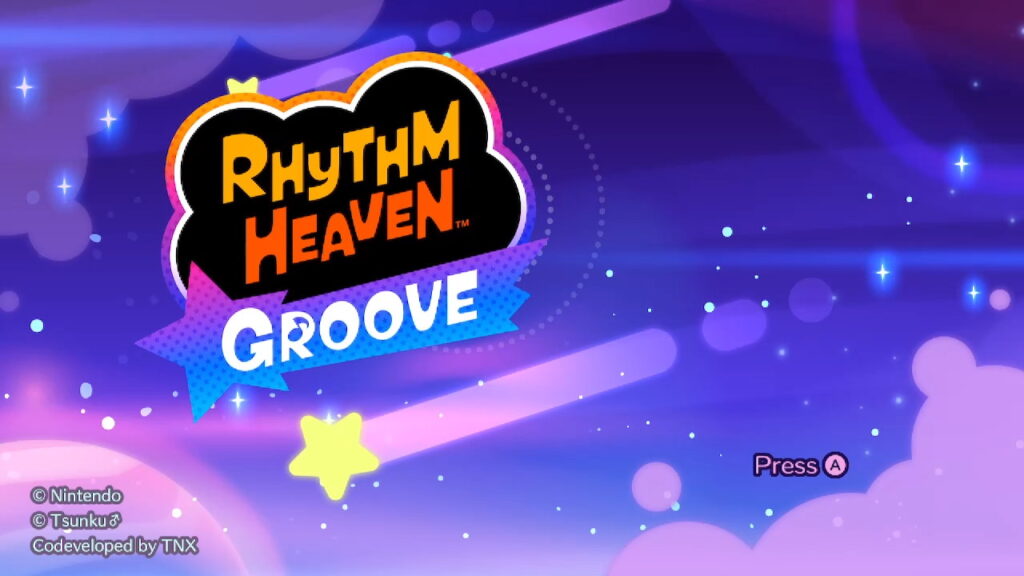
Rhythm Heaven, (and Rhythm Heaven Groove, by extension) is best described as a charming, quirky collection of song-length rhythm games. It is quite literally a game you can play with your eyes closed, though you will need to be able to hear the game loud enough to effectively play it!
In this iteration of the series, you’ll play the roles of a woman catching and chopping veggies, an alien who can warp to avoid lightning, a jump-roping soda bottle, and so much more. But you won’t be doing all of that right away: you’ll have to unlock each game in sequence, clearing them one-by-one as you progress through stages of the game.

And while there isn’t a true story mode in the game (something only the 3DS entry, Rhythm Heaven Megamix has), there’s an expansive single player campaign, a few bonus modes and games (including a standalone rhythm-based RPG), as well as local multiplayer for up to 4 players in its own campaign mode.
If all that sounds interesting to you, sit back, relax, and get cozy with a nice tea, soda, or other beverage ending in -a as we bring our A-game and swing to our next section.
Or, if you’re ready to take the leap, you can check out the game on Amazon with our referral link, here:
https://amzn.to/4heeDOp (affiliate link)
Tuning and Calibrating
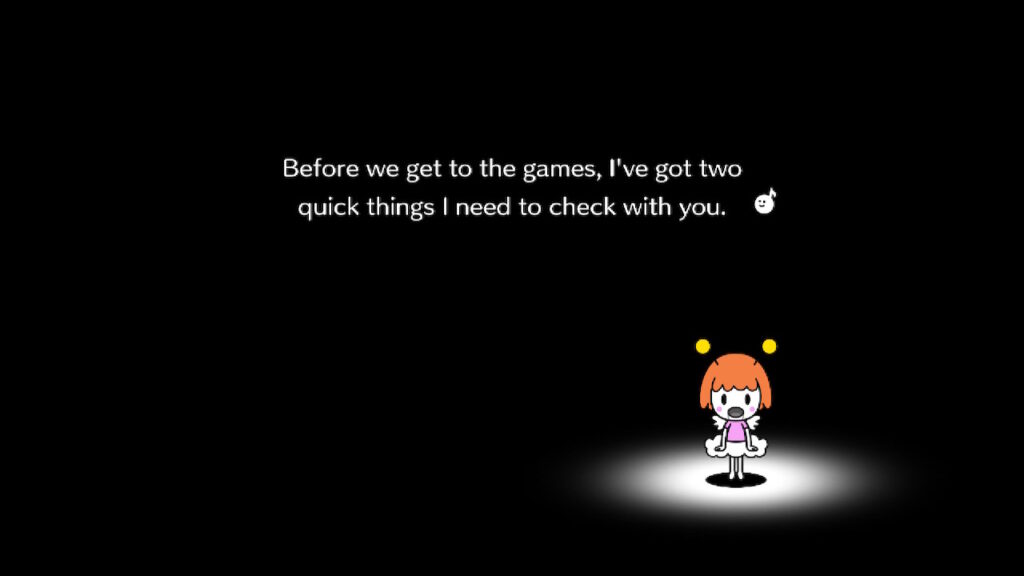
Whether playing the full game, or the demo from the eShop, the game starts off with a quick introduction from Lil’ Miss Reeds, a cleverly named robot that reads screen text aloud (if the player chooses it), followed by a sound calibration if played in Docked mode.
While Miss Reeds serves as an accessibility feature, I found her narration to be quickly tiresome, and disabled it for a quieter, traditional experience. Still, those who are visually impaired may welcome the consideration!
As for calibration, despite handheld play being immaculately tuned, I struggled to get a good calibration when output to a TV. Truthfully, I didn’t even try to play docked until well after perfecting the solo campaign, and the audio delay from the TV was enough to cause me to mess up nearly every rhythm game I replayed. While I’m sure further fiddling would help, I’d strongly recommend playing handheld or tabletop for the best experience.
And speaking of experience, players who’ve played the game’s demo have the option to copy their progress over when they play the full game, so no time is wasted in transitioning into the rest of the game.
While the onboarding process is quick and simple, I will say I was disappointed to see the same lackluster main menu from the demo in the full release.
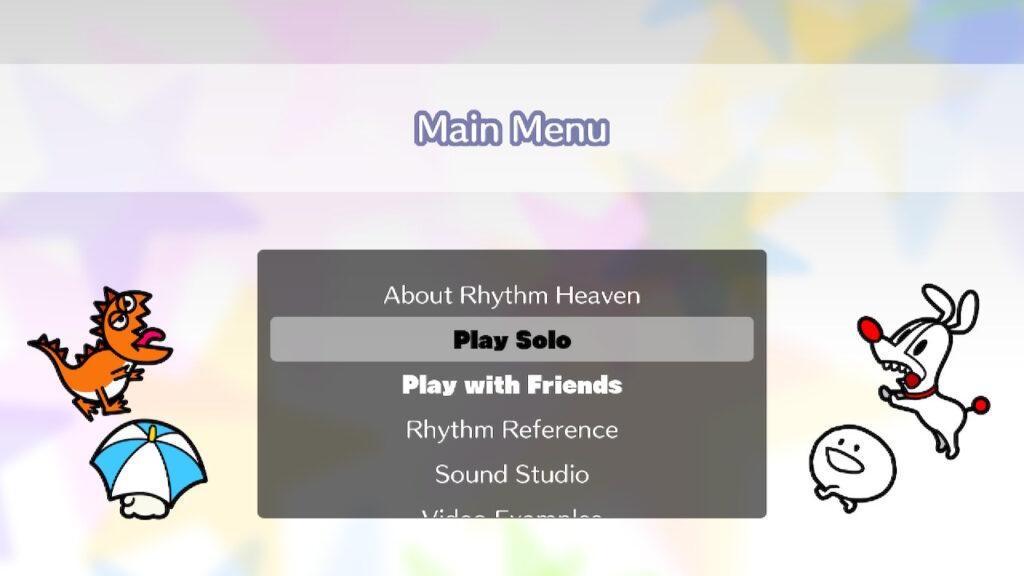
For a demo, it’s perfectly acceptable, but for a full game release in a nearly two decade old series, known for its flashy menus and title screens, it’s a jarring inclusion to say the least.
Next, with the sound checks and fine-tuning complete, we can start composing our next review beat: the gameplay.
The Games – Climbing the Scale
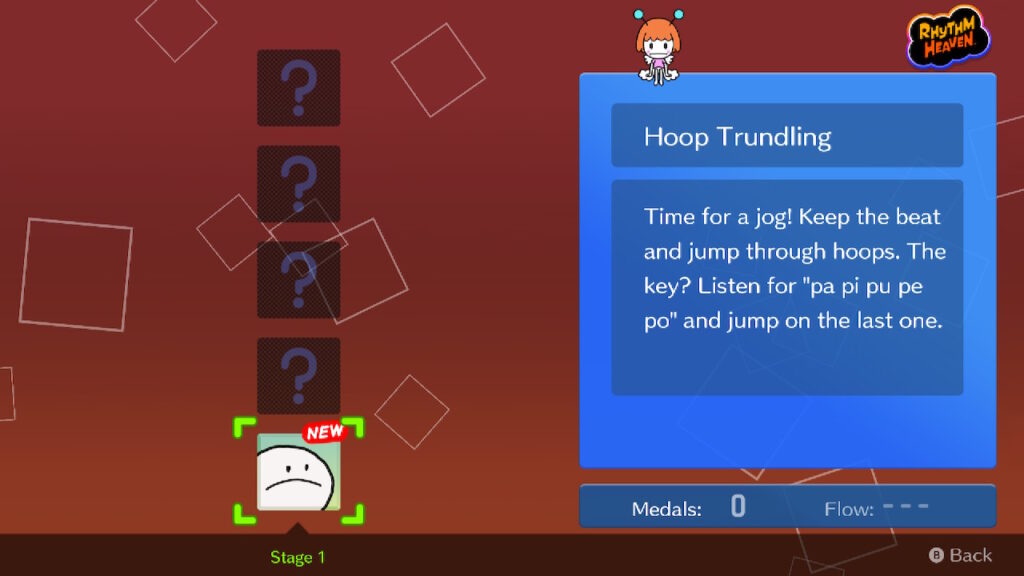
Like all Rhythm Heaven games prior, you’ll start off Groove with a single rhythm game to play, unlocking new games in a fixed order by completing the one prior. While it can be a bit unusual to start off a rhythm game like this, part of the charm is that it’s like a box of chocolate: you’ll never know what you get next until you clear the last one!
Before you play any rhythm game, of course, you’ll be given an explanation of the controls, as well as ample, self-paced practice to make sure you understand the cues and patterns. Don’t let the simplistic art style fool you though: whether you’ve got rhythm in your bones or two left feet, Rhythm Heaven Groove and its rhythm games are filled with character.
For example, missing certain prompts in “Brolly Good Show” results in your character playfully sticking out their tongue, to the disdain of the rest of the quartet, while a seagull in the practice of “Crab Snacks” intimidatingly stares down their next meal — er… graciously waits to make sure you’ve got that pattern down pat!
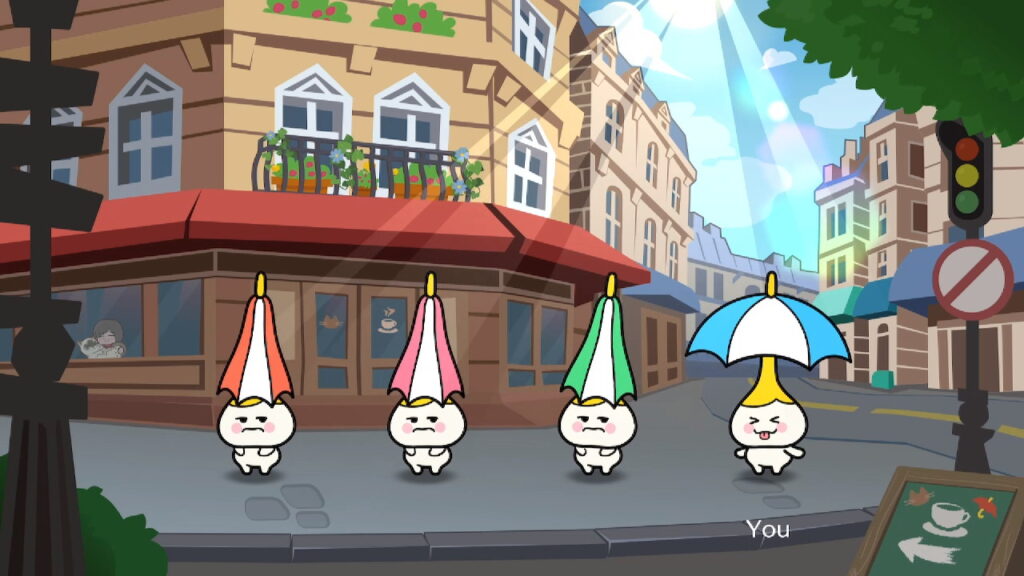
Once you complete a rhythm game, you’ll be given feedback on your performance, followed by an overall rating of “Good”, “Amazing”, or “Try Again”. Getting your first “Amazing” rank per game awards a medal, as well as other bonuses, while getting a “Try Again” rating counts as a non-passing score. The game will also calculate your “Flow” between games, a value showing just how proficient you are throughout the campaign, with the highest being a total of 140.
Lastly, by completing four games in a column or “stage”, you’ll unlock a remix rhythm game; a mashup medley combining the four prior games, and challenging players to remember both the audio cues and controls without any practice. Think of these as tests, where passing demonstrates you’re ready for the next set of games.
By the time you reach the Final Remix, in series fashion, you’ll then have to play through a mash-up of every rhythm game in a single sitting! (Side Note: Super Mario Run’s “Remix 10” mode is entirely inspired by Rhythm Heaven in this way!)
And if you’re struggling with a particular rhythm game? The Cafe’s Barista can help you out by skipping a game, something we’ve covered in our related post on skipping games in Rhythm Heaven Groove.
While I enjoyed the rhythm games and remixes from beginning to end, as a series veteran, I’m again disappointed, this time in the presentation of the remixes.
Part of the charm of the remixes in the other entries, is that each one had both a distinct musical and visual theme. Between music, audio cues, character redesigns, and the themed visuals, they all blended expertly to make memorable experiences, and I would often return to the older games, years later, just for those remixes.
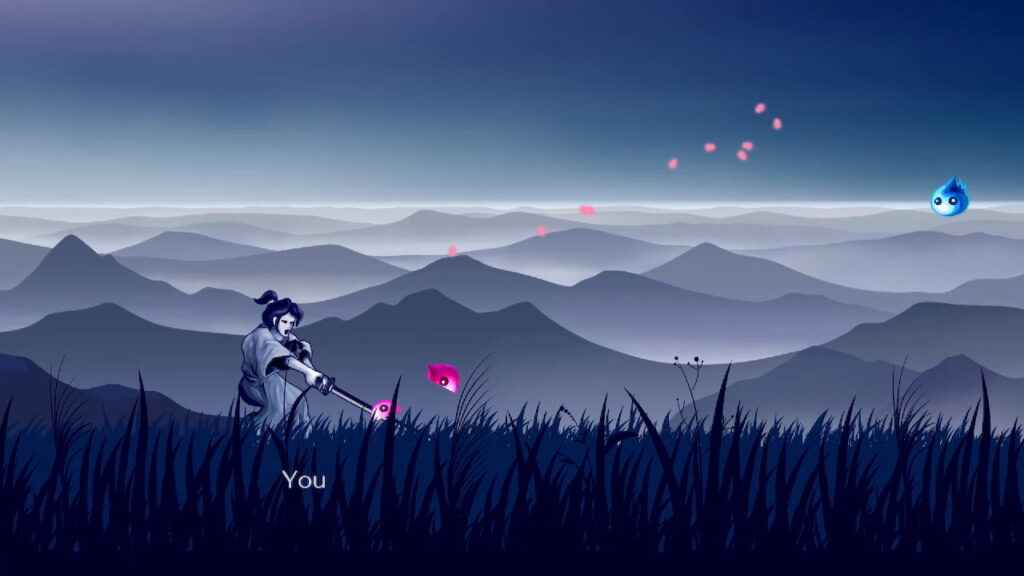
In Groove, however, I’ve noticed a mere three remixes that replicate this longstanding charm, with the soonest appearing in Remix 5. The rest of the time, (barring sequel games), you’ll see the same characters and settings, giving the remixes a sense of repetitiveness instead of charm. I’m honestly baffled by this omission, as it feels like the core of what makes rhythm heaven special.
It’s a lot like getting hyped for an upcoming concert or music festival, and instead of the local act(s) getting in the spirit with new costumes and dressing up the stage, they attend with their everyday clothes for each event/song. Even some simple palette changes would help keep the remixes from feeling so… stale.
Still, the rhythm games are solid, and most of them do evoke the signature Rhythm Heaven style. But there’s more to the game than just ratings and remixes. You can prepare for treble and strive for Perfects, which we’ll talk about next.
Pitching for Perfection
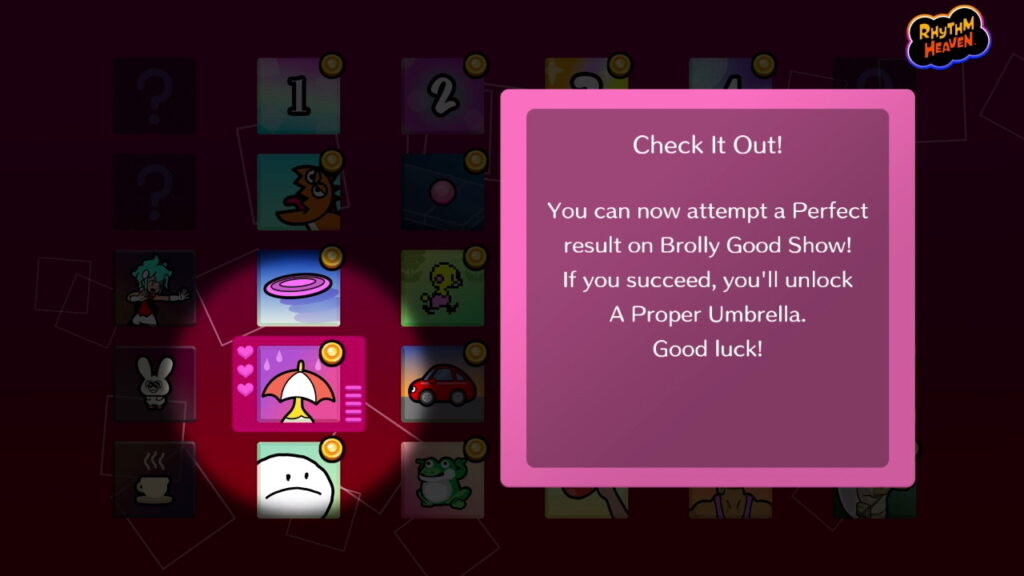
We’ve mentioned the three regular ratings on rhythm games, but there is a 4th rating, “Perfect”, reserved only for games (and remixes) you’ve already gotten a medal on.
Im series tradition, this rating is only achievable when the game prompts you to revisit a rhythm game and make an attempt; you will not receive a Perfect even if you play a rhythm game flawlessly otherwise. These started appearing in my playthrough from Stage 5 onwards.
In addition, you only get three tries on a given prompt to complete a rhythm game without a single mistake. And the game itself saves as you start a run, to prevent save abuse for unlimited tries.
Related: How to Get Perfects in Rhythm Heaven Groove
Should you fail this opportunity, it’ll cycle back around eventually, but if you achieve this flawless run, you’ll be presented with a certificate on-screen, and unlock bonus content in the Rhythm Reference as a reward. The Perfected game will also have a special marking on the game select menu showing your accomplishment.
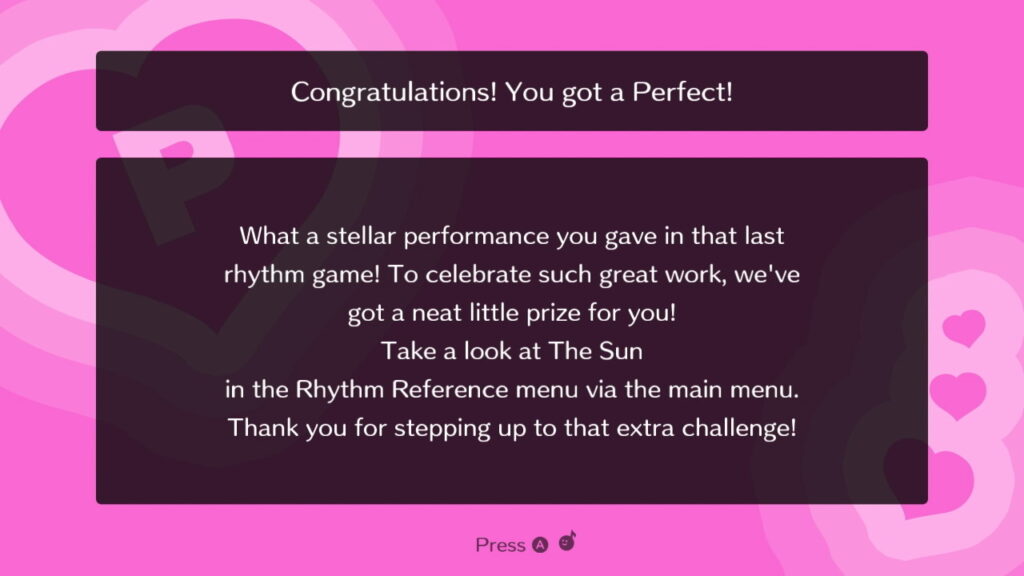
Having Perfected the game already, I’ve noticed that the rewards are either 4-panel comics, or written material that sheds more insight into the characters featured in the rhythm games. Most of the comics elicited a chuckle out of me, and some of the written backstories were heartwarming, while others were bittersweet. (Justice for the Guardian!) I would always encourage the challenge in getting a Perfect, though some players may not find the rewards interesting enough to warrant the effort.
That being said, unlike other entries in the series, Perfects are no longer the highest ranking or hardest challenge you can achieve either. That honor belongs to the starred rainbow perfects you receive by getting a perfect on the Night Mode version of a rhythm game.
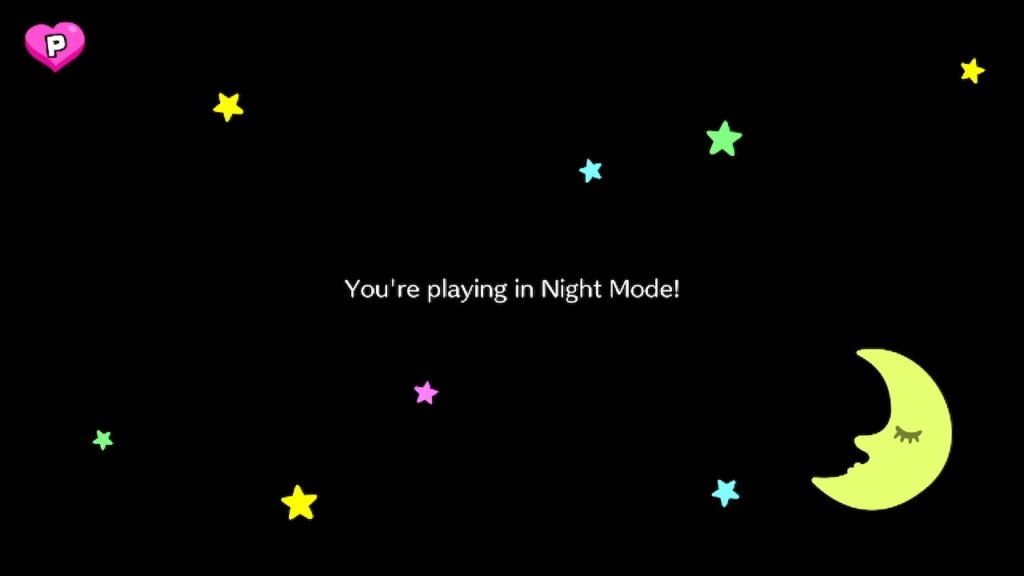
While the game mentioned Night Mode verbatim after clearing the campaign, and as chatter from the Café’s Barista, the game unfortunately did not explain how to unlock this mode, nor even what it was, leading to confusion and frustration. The gist of it is this:
Once you’ve gotten a perfect score on a game, you are given the option to “Go for Perfect” when you select it again, and can prove your mastery of a particular rhythm game by getting Perfect Streaks.
By amassing thrice the amount of consecutive perfects this way, players will then unlock Night Mode for a rhythm game, which challenges players to play with an intentionally blackened screen. If you’ve ever bragged “I can do this with my eyes closed”, Rhythm Heaven Groove takes it a step further and says, “Prove it!”
For more details on Night Mode and how to unlock it, you can view our guide on it, here.
Lastly, on the ledger line between the treble and bass of the main rhythm games, are extra games accompanying the big C campaigns. We’ll discuss those now.
Beatspell and the Bonus Staff
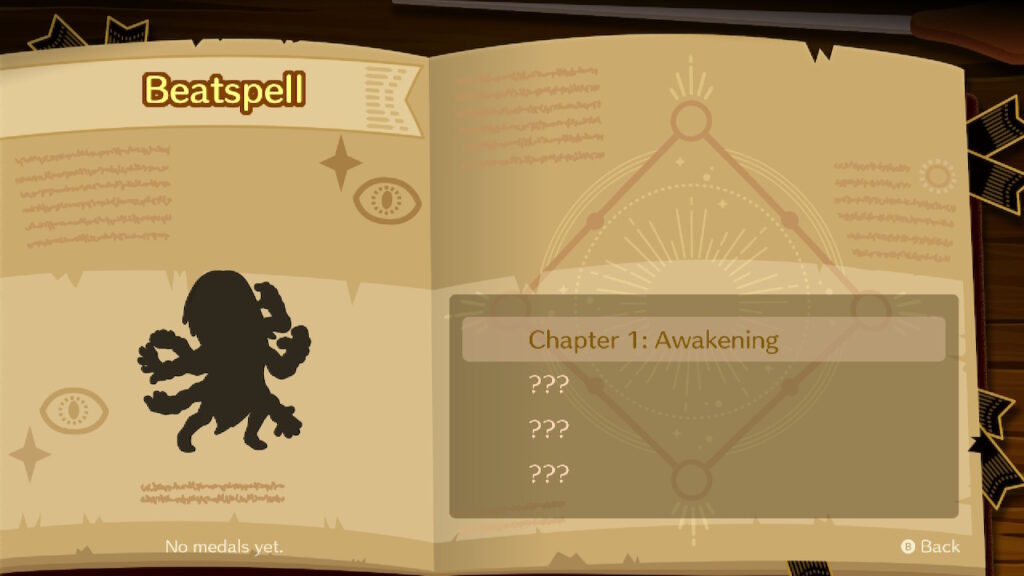
After clearing your first remix, you’ll unlock a new column off to the left that houses bonus rhythm content. Both multiplayer and solo campaigns have brief micro-games you can play in the Rhythm Toy Box mode, while solo, you can play a charming rhythm RPG, titled “Beatspell”.
Each of these bonuses unlock additional entries as you continue to rack up medals and “Amazing” ratings in the main rhythm games, while others (they’re a secret!) require significant progress in the main game just to unlock.
Beatspell, one of these aforementioned bonuses, is one of the standout hits of the entire game. It’s so good in my opinion, that if it were ever to be released as a standalone title, I’d buy it in a sixteenth of a heartbeat. (Funds permitting.)
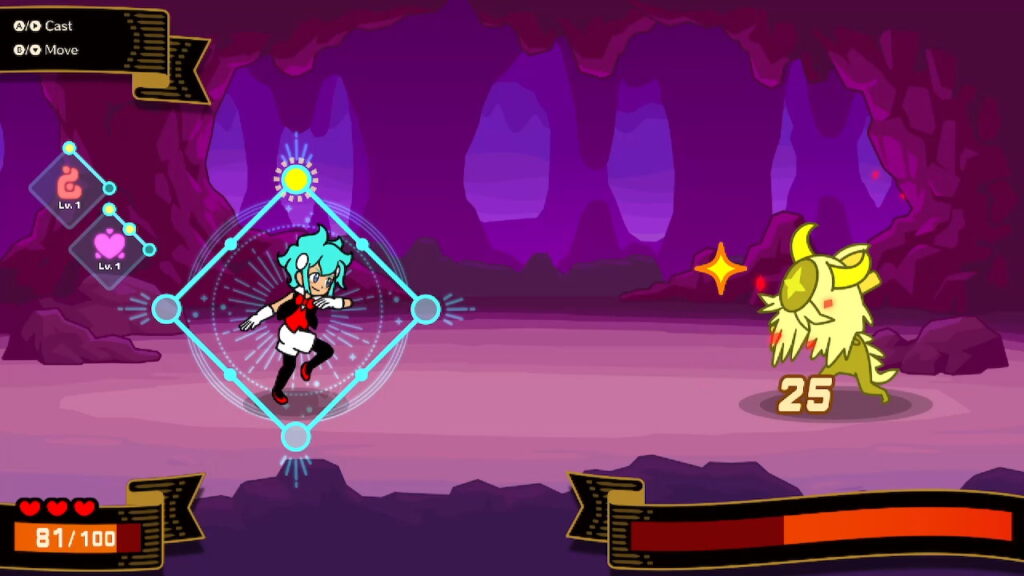
In Beatspell, you play as a magician, tasked with defeating monsters in a local cave before they can escape and attack the kingdom. The catch, as you may have guessed, is that you can only cast spells in time with the rhythm. And unlike the scripted main games, there is genuine danger of losing health and getting a game over, no matter how perfectly you match the rhythm.
Not matching the proper timing also affects the spell you cast, as well as its potency: Casting too soon can be the difference between casting Flame instead of Wave, or casting Cure with extra steps instead of a successful Bolt. On the other hand, casting spells with perfect timing on every note will result in a critical hit, and is the only way to inflict these bursts of damage.
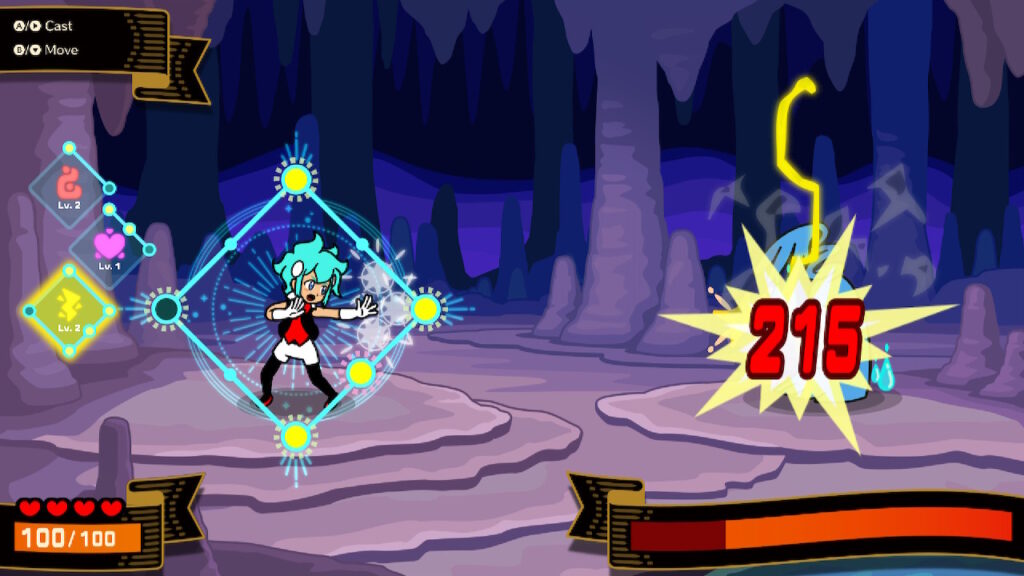
You also have free reign on which of the learned spells you cast, though your only cues are that of the music, and the swaying of the characters. Clear an enemy encounter, and you get to choose which of your spells you can level up. Find a Magic Circle, and you can add a new spell to your repertoire. Found a treasure chest? Great! Pick one of those items for a passive boost for the rest of the chapter!
While it’s technically a roguelike, each of the initial chapters are more of a new level instead of a randomized adventure. Clear all of the chapters and earn enough medals in the main game, and you’ll unlock a bonus quest with a fully randomized set of branching paths and spells.
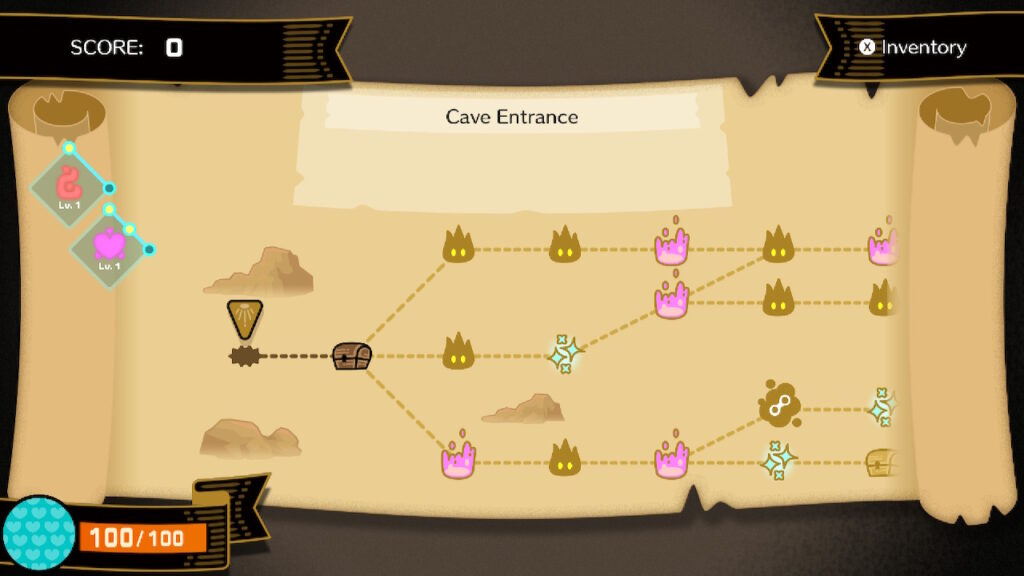
Personally, I had the most fun of the game working through Beatspell’s campaign. The characters are memorable, the story is well constructed (though not overly complex), and the final chapter not only introduces a catchy motif, but also a boss battle with tempo changes and a blistering pace of 200 BPM. (Fast tempos are the most fun!)
It’s an experience I’ll always return to, and one I’m sure others won’t forget, either! But why leave it to chance? You can experience all Beatspell has to offer in Rhythm Heaven Groove by purchasing it from one of our partnered merchants below! (We would also earn a commision for the referral at no extra cost to you!)
Buy Rhythm Heaven Groove (and Beatspell) on Amazon
For the music enthusiasts, should you really vibe with the game’s music (Beatspell is filled with great tracks!), you can listen to its music at any time from Sound Studio in the main menu. From there, you can save them to playlists, and play them with the screen off, similar to Super Smash Bros. Ultimate.
Or, you can even watch the game play through rhythm games you’ve cleared in Video Examples from the main menu. This could be helpful for learning the timing on certain games, though you can also see lyrics played back on the games that have them. The “silly” lyrics in partiuclar for foreign language songs is absolutely hilarious, translating the Japanese, Spanish, French, and Italian songs into malapropisms and mondegreens. While the Barista mentioned it as well, it’s admittedly a nice little easter egg I didn’t discover until after writing this review.
I could go on and on about the bonuses for a meter and a half, but we’re rapidly approaching the end of our time signature. We’ll conclude with some final thoughts.
The Reviewer’s Musings – Final Thoughts
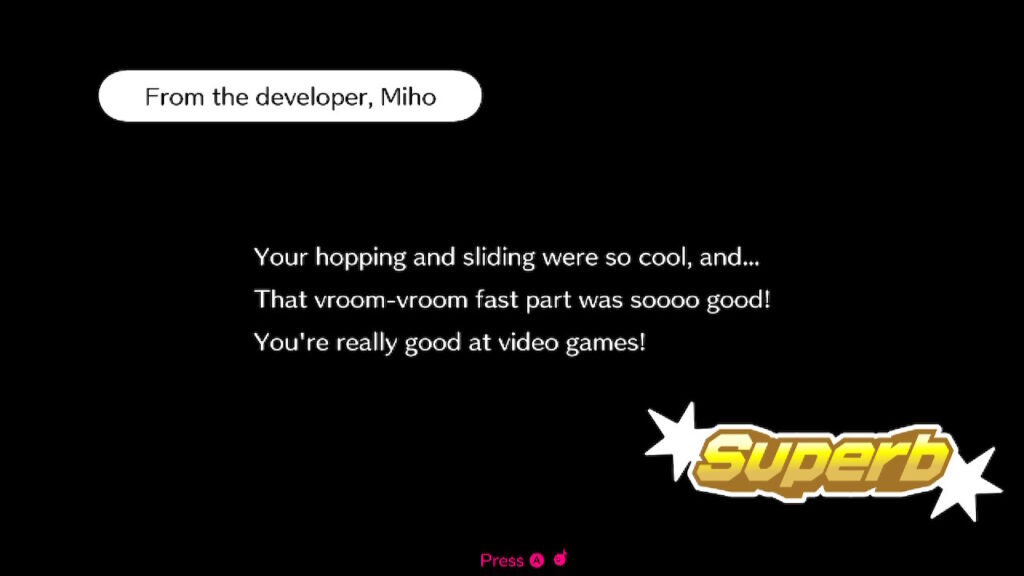
All in all, I’ve enjoyed my time with Rhythm Heaven Groove. I’ve barely been able to break away from it, even in the midst of pressing deadlines.
And yet, even with the issues in presentation, something felt a bit off in my time playing:
While the games are solid and the core elements that make the series unique are all present, I’ve found that the games themselves aren’t quite as memorable, and don’t hook me like they did in earlier entries.
At first, I thought I was just being harsh. Or that I hadn’t given the game enough time to sink in. But having briefly replayed Rhythm Heaven Megamix, my suspicions were true.
Compared to other entries, the absurdity and zaniness of the rhythm games feels like it’s been swapped for more… probable, everyday scenarios. There’s no cheerleading squad in a library, no watch full of monkeys, no Badminton with airplanes, no stomping to harvest crops, and certainly no shooting down alien spaceships in time to their appearance.
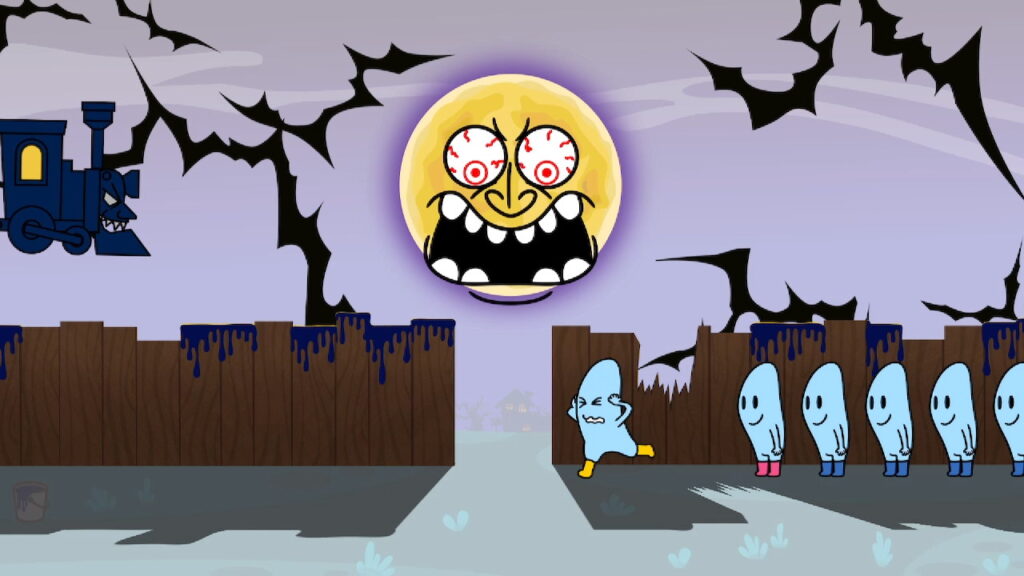
The most outlandish that Groove gets in this department, is in having ghosts sneak past a sentient moon that suffers from rhinitis every 1,000 years, and becomes an absolute menace because of it. (Please don’t cancel Sneezy Moon! I love him!) The lovable, groovy, chant-powered Guardian in Space Sentry comes in at 2nd, though it arguably ties with the storm-dodging antics of the warping aliens in Lightning Bolting.
And again, there’s nothing wrong with Groove’s all-new lineup of games; they still feel like Rhythm Heaven games. But I’m left craving the eccentricities of the vocal cues like “wub-a-dub-a-dub is that true?”, “punch-kick!”, and even the timeless “rah-rah sis boom bah-BOOM!” of prior entries. Even just saying these cues, I can vividly recall each game and its music with a fond smile. “I suppose” Groove dropped a tomato in this regard “fo’ sho.”
I know I’ve referred back to other games in the franchise quite often in this piece, and looking back, it’s for good reason. Each entry I played felt special:
Rhythm Heaven lit a spark in my soul and set the bar. The blistering pace of Remix 8 echoes in my mind even now.
Rhythm Heaven Fever put songs in my heart that I actually sung out loud to, instilling me with the Dreams of Our Generation. (I lament the fact that there isn’t an official soundtrack release for Fever to this day!)
Rhythm Heaven Megamix gave me a story, (albeit a weird one), and boldly celebrated its legacy with the best games in the series. The constant accrual of coins to use in its in-game shop and pinball game made even my sloppiest attempts worth playing to the end.
Rhythm Heaven Groove, in comparison, does compel me to seek greater heights beyond perfection, and yet, while the music is flowing and the beats can bop, it doesn’t quite move me like the others did, which is unfortunate, because I really, really want to love it.
In conclusion, if this were a video game review, (which it is), I’d say that Rhythm Heaven Groove is another solid addition to the Switch lineup. The games are fun and the formula is all there, but there’s a dilution of the usual charming absurdity, and fewer overall standout moments that really make the game shine.
Overall, I’d rate it “Really Good”, but just shy of the “Amazing” I know the series deserves. Don’t just take my word for it though, if you’re on the fence about it, you can always give the demo a try from the eShop!
And again, should you want to buy a copy for yourself, you can view the game on Amazon. <--- (Affiliate Link)
Honor Rating:
Overall Enjoyment: 4/5
Memorability: 4/5
Replayability: 4.5/5
Performance: 5/5
Value: 5/5
Final Score: 4.5/5
Clef Notes
Rhythm Heaven Groove is a solid entry and welcome addition to the original Switch lineup, though the game suffers from a lack of presentation in its Main Menu and several of its remixes.
The game itself can be hard to put down, and is enjoyable throughout the campaign, but the rhythm games themselves lack the lasting appeal and signature absurdity that makes the series pop. Beatspell, however, shines as a bonus game. Please play in a non-TV mode for optimal beat-mapping.
Honor Rating:
Overall Enjoyment: 4/5
Memorability: 4/5
Replayability: 4.5/5
Performance: 5/5
Value: 5/5
Final Score: 4.5/5
What I Like:
- Demo progress is transferable!
- All Solo games are new
- The series’ humor is still strong
- Beatspell – all of it!
- All practices can be skipped, even without completing a game
- Going beyond Perfection with Perfect Streaks and Night Mode
What I Don’t Like:
- Lackluster main menu
- Games don’t feel as memorable
- Remixes aren’t always themed
- Calibration is iffy; no option to calibrate for (Bluetooth) headphones in handheld mode
- No guidance on unlocking or explaining Night Mode
Things to Consider:
- Rhythm Games aren’t for everyone
- Not as many up-tempo games
- Incentives for Perfect runs may not be tempting
- No story mode; just sheer progression