Observer’s Log, Lab Diagnostic Report #2: The time is 09:26 AM on May 14th, 202X. Analysis on Specimen C4ND1D is underway. Prior research has determined the subject has perfectionistic tendencies and suffers from acute Imposter Syndrome.
Other variables unknown; report inconclusive. Further research required.
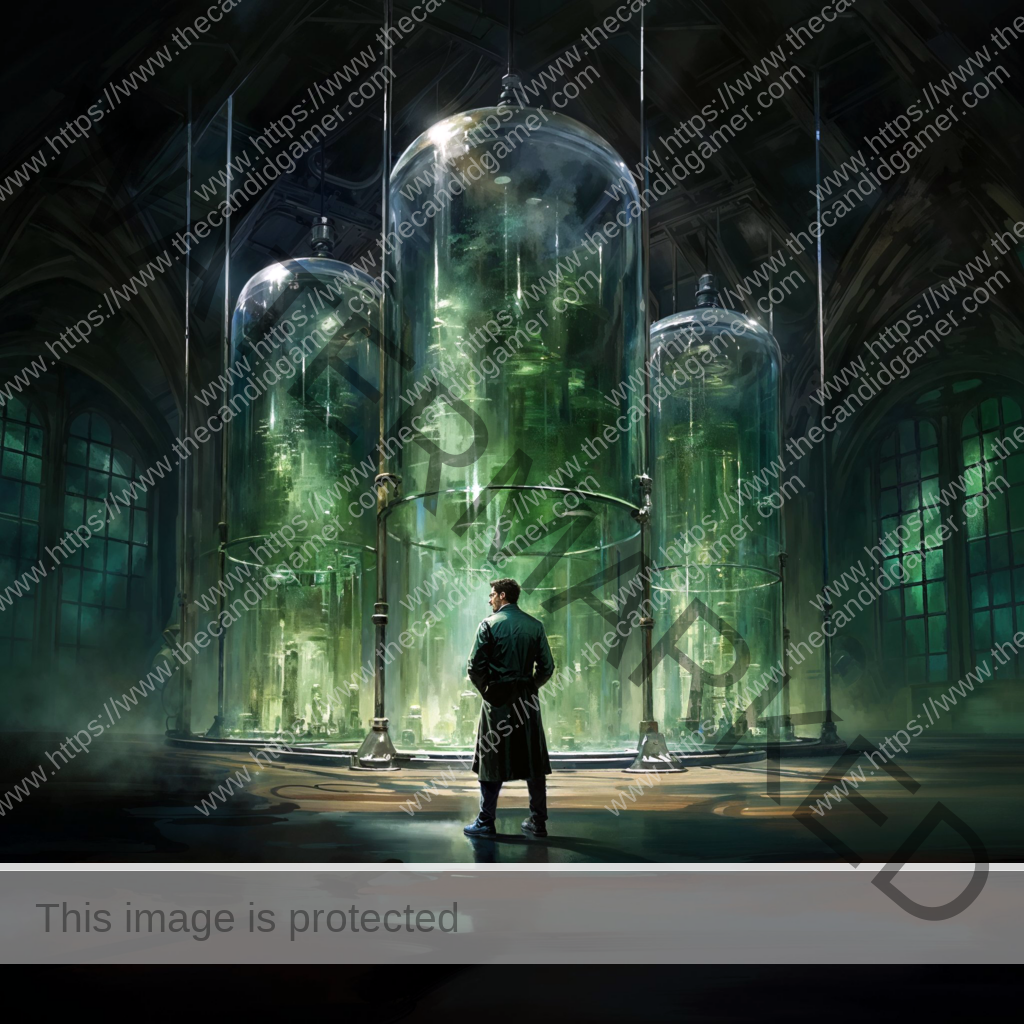
Today, we continue our research on Specimen C4ND1D. The Subject appears to be ever-growing and changing, yet, the more it is analyzed, the less certain we are in our understanding of it.
Physical Description: What we do know, is that the subject is Male, with brown eyes and black hair. DNA matches 100% to that of a human. It also appears to have above average hand-eye coordination, and an extreme aptitude for digital simulations.
Behavioral Analysis: Subject is expressionless and still. For reasons unknown, it remains in stasis, watching the world from behind its glass containment. It is surmised that the Subject is carefully examining the environment, just as we are examining the Subject…
This concludes our preliminary findings.
The Subject possesses a remarkably unknowable quality; Further insight on the Subject has eluded all other observers, making conclusive reporting difficult, if not impossible.
And yet, I sense a certain kinship with the Subject; A certain familiarity that defies conventional knowledge or reason.
I know the Subject all too well, for I am the Subject.
I am the specimen, and for far too long, I’ve always felt just like what was described… a foreign creature, isolated from the world at large.
Thus resides the true purpose of this diagnostic; to explore why the Subject — why I feel this overarching feeling of non-belonging.
Fortunately, I have already identified a few logical explanations for this sense of estrangement. These notes and findings are compiled as Field Observations, and are included with this report.
Field Observations
Field Observations have been gathered via objective self-reflection, and may help in better understanding the Subject’s mental quandary.
The noted observations are as follows:
Observation 1: Perpetual Extraneousness
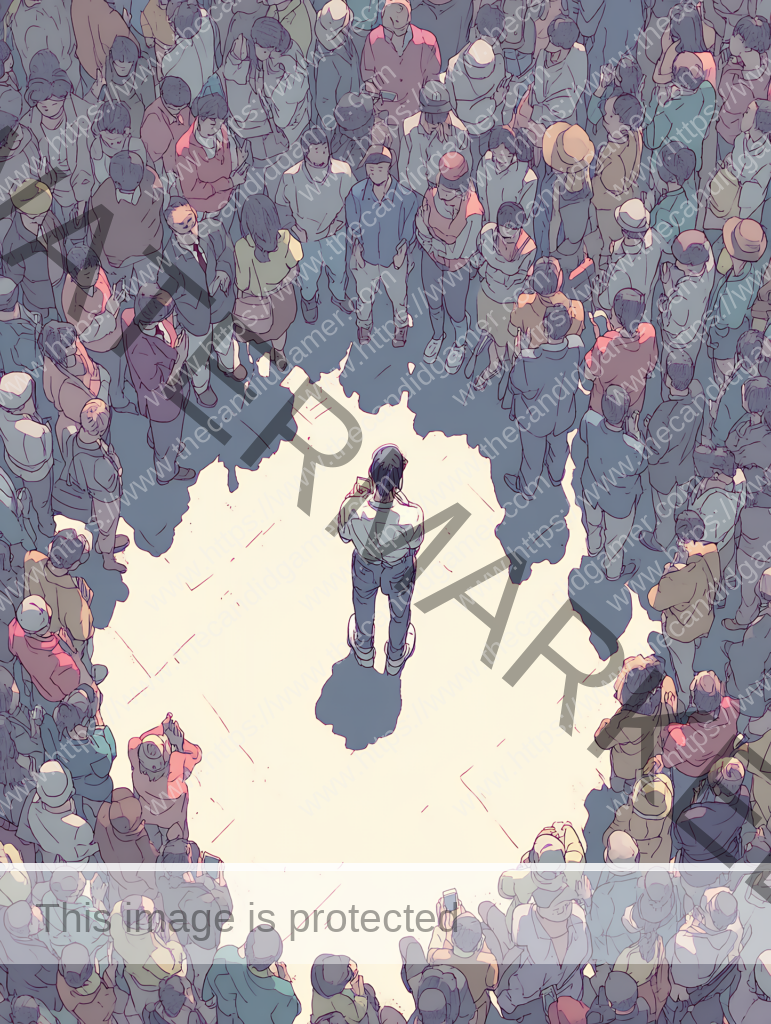
Firstly, as per the subject seems to demonstrate in interpersonal relationships, there is a markedly persistent tendency for the Subject to need to feel a sense of belonging in their interactions with others. This is normal enough behavior, however, the Subject apparently perceives that they must instill a sense of value and uniqueness in all interactions with others.
When the Subject finds that other individuals provide similar or identical value to the same person or group of people the Subject interacts with, the Subject withdraws into themself. They appear to believe that they are no longer relevant or desired in such interactions, and consequently, self-isolate, fearing that their lack of value will lead to rejection and abandonment.
Observer’s Analysis: While roles can help provide structure and familiarity for a person, they can also have adverse effects if held onto too tightly. The Subject seems to be suffering from these aforementioned maladies, namely those tying into Identity and Self-Worth.
Take the following scenarios as example: A student may feel poorly about themselves if they receive bad grades, while a child may similarly call their value into question if they don’t live up to their parents’ expectations. Regardless of whether the roles are Ascribed or Achieved, the plausible result of either is the same: a sense of shame or failure in not living up to the roles they hold.
This may also lead to disruption in identity for those affected, especially if the role becomes enmeshed with one’s sense of self.
Following the same examples, if the student is a high performer, yet makes poorer grades as of late, they may no longer identify as a high-performer. Similarly, the “good child” in a family may feel that they are fundamentally flawed if they suddenly start getting in trouble within the household. In both cases, the crux of what those individuals hold to be their identity gets challenged, and a feeling of displacement takes hold.
The Subject is very much the same way. When the Subject’s roles are challenged, they feel similar feelings of displacement and lowered self-worth. This in turn makes the Subject question their value, and as a result, they remove themselves from the environment entirely as a defense mechanism.
It would do the Subject well to learn that they are not their works, nor their efforts. They are more. They are human. Their intrinsic worth should never be tied to how adequately they help others or efficiently they impart wisdom. Even if the Subject feels they have little else to offer, (Especially given Observation 3 below), people may enjoy their company for other reasons, like their compassion or creativity, if not for who the Subject is in themself.
Observation 2: Increased Cortisol and Epinephrine Levels

Further research and study has led to a new discovery in the Subject’s lab work:
The Subject has elevated levels of Cortisol and Epinephrine circulating in their system. While the readings are not at high enough levels to cause damage, it is imperative for the Subject to reduce them.
Observer’s Analysis: Epinephrine, known as adrenaline, is a stress hormone. It is secreted in periods of stress, and prepares the body for short-term threats, stressors, and exertion by increasing blood circulation, breathing and metabolism.
Cortisol, similarly, in periods of perceived danger, can alter or temporarily shut down bodily functions that don’t directly support physical survival, such as the digestive and reproductive systems, to name a few.
Both are released into the body through the Sympathetic Nervous System (SNS), which primes the body to react in what we call the fight-or-flight response. The heightened presence of both of these hormones indicates the subject may be dealing with this state often.
In layman’s terms, the Subject is simply too stressed at times to effectively feel a sense of belonging and security. They are constantly in a state of fight-or-flight, or more accurately, in survival mode, to be able to interact with others, at least without the persistent feeling as though they should be investing their energy into their own security instead of social interaction.
Generally speaking, the Subject is in a bind. While the body’s Parasympathetic Nervous System does activate after periods of heightened stress have passed, helping to regulate and balance the body back from the effects of stress, prolonged stress in general is adverse to an individual’s health.
If possible, it would behoove the Subject to find ways to resolve the causes of stress entirely, however, it seems the Subject does not feel that this is possible in their current state.
Sadly, this is beyond the scope of my study. I cannot at present determine what, if any solutions, the Subject can implement to change this perspective. Further study is required.
Observation 3: Aberrant Avocations

This is a particularly double-edged phenomena working against the Subject.
The Subject has a rather peculiar set of avocations, or hobbies in life that they truly appear to enjoy. They are not nefarious or foreboding interests in any way, but they differ nonetheless from those popularly observed in typical social settings.
When the Subject expresses enthusiasm for their anomalous hobbies to others, they find they are often met with bewilderment or indifference. The conversation thereafter tends to come to a lull, or is swiftly changed afterwards.
The same scenario also applies in reverse. The Subject can find themselves in discourse wherein the Subject itself does not feel comfortable engaging with, nor any sense of relatability, and thus, drops out of the conversation.
In short, the pastimes and interests held by the Subject and those upheld by larger society are at a mismatch. What the Subject values often alienates others, and the popular hobbies of others tend to alienate the Subject.
As a learned response, the Subject appears to have stopped talking about their passions altogether, preemptively expecting rejection, or having assumed that their interests are shameful.
Observer’s Analysis: The Subject would do well to build up their confidence and learn to stay in their truth and power. The opinions of others are just that — opinions — and should not be the determining factor by which the Subject chooses whether to express themself or not.
Individuality is not a weakness or a curse, it is a blessing through which new ideas and perspectives emerge. Such is what makes the Subject unique amongst their peers. It may even lead to new works of art, or creative expression that could be enjoyed by many others.
By disconnecting from who they truly are in such a way, the Subject is simultaneously creating internal dissonance within themself, as well as increasing the depth and scope of their Shadow.
In other words, the Subject is inflicting psychological wounding upon itself, which leads to further unconscious suffering in its own life. Specifically, through choosing and dividing which aspects of oneself are “favorable” and which are “negative”, the Subject is ultimately fragmenting who they are.
If the Subject truly enjoys their hobbies, and such hobbies pose no harm to the safety or well-being of others, then they should stand up for themselves and continue to enjoy what brings them happiness. The Subject should be enjoying their activities strictly for themself, independent and irregardless of the opinion of others. Such a mindset may even prove to be freeing for the Subject as well.
Observation 4: Caliginous Chronology

This observation is easy to miss for those without a keen eye.
In the discourses the Subject has with others, the Subject tends on occasion to entirely withdraw from social engagement. Unlike the established 1st and 3rd Observations listed herein, these withdrawals are not tied to the Subject’s avocations, nor their sense of value, but appear to have a deeper, more hidden source.
Specifically, this behavior seems to come about whenever conversations trigger unpleasant memories of the Subject’s past. While no isolated incident should rule over an individual’s life forever, it appears that there are numerous events in the Subject’s life that have become contentious, caliginous memories, especially those regarding family, childhood, and even food.
As a result, the subject appears to feel an even deeper sense of alienation from others.
Observer’s Analysis: The Subject understandably wishes to distance themselves from their past. It is a normal response to such circumstances. But when prolonged, what is this, if not avoidance at its core?
Does a shattered vase repair itself after a fall? Or does a frayed shirt mend itself? No, they do not; they simply remain damaged until properly restored. The same applies to the Subject as well.
While the Subject may not have to share their past with others in general, it would behoove the Subject to learn to accept that it happened — not to believe it was deserved, nor to blindly excuse any acts from others therewith, but to understand it cannot be changed, and see how the events have shaped them in their growth and understanding. Ignoring this will only further exacerbate the pain, and reinforces false beliefs about their self-worth.
The Subject’s past does not determine who they are, or who they will be, it is merely but a chapter in the grand tale that is their life. But by resisting and denying the events that have made them who they are today, they are in fact, resisting and denying parts of themself. (i.e., Event X happened, and is wrong, so because X makes them feel emotion Y, they avoid event X and emotion Y and become person Z to spite it.) The mental message is thus set that the Subject itself is inherently shameful or unacceptable, further adding to their affliction…
This is not to say the Subject is not allowed to grieve, nor feel upset for their past. That is not at all the conclusion I have reached. But I believe it is best for the Subject to acknowledge the past in their own time, see how it is affecting their thoughts and actions into the present, and try to resolve both the underlying beliefs, as well as the hidden fears lingering from those events that still have a hold on them. This is what acceptance truly is, and in my opinion, is the first step towards fully resolving the pain of the past.
Observation 5: Interpersonal Disengagement
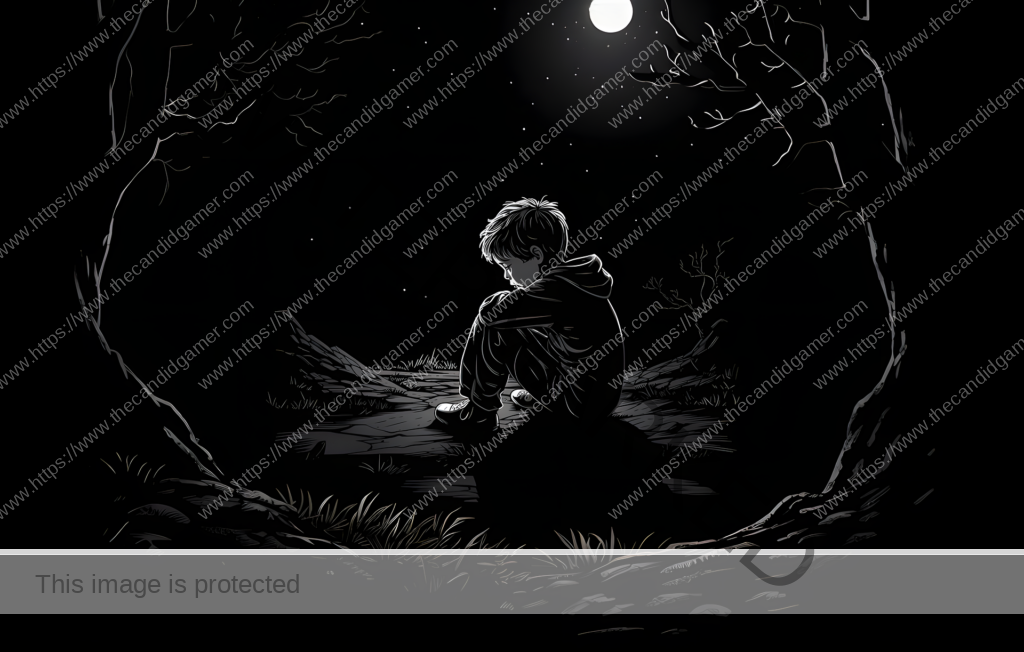
The final observation to be added to this report, and the most complex of them all.
In general, we’ve established that the Subject appears to withdraw and disconnect from social connection due to a myriad of reasons.
The first reason we’ve seen is one relating to a perceived lack of value.
The second stems from a perpetual sense of instability and hyperarousal.
A third reason correlates with eccentricities not shared with those around the Subject, and yet another still arises from the shame and conflict with their own past.
And yet… even despite being able to clearly define the prior observations into their own distinct categories, it appears something else, something… gestalt, further drives the Subject to preempt a sense of lonely resignation. Perhaps it is an amalgamation, a blending of all the combined negative experiences the Subject has endured to date?
It appears now that the Subject no longer believes they can form stable, long-term relationships with others, and as such, they anticipate all connections will fall away in time.
The Subject does still make an effort to try to connect with those around them, and yet, there is a subtle detachment about those efforts. Almost as though they have low expectations from the start, and believe their efforts are doomed to fail.
Observer’s Analysis: This observation seems to operate in tandem with all four of the prior observations.
Put simply, the Subject has experienced repeated moments of having their sense of value and foundation threatened, while constantly feeling as though their past, and their interests are not “normal.” They have thus surmised that they, themselves, aren’t normal just as well, and see themself as outcast and undesirable.
Likewise, the Subject’s detached approach appears to be a stoic coping mechanism, based on previous disappointments in connecting with others. The Subject has found it overall to be too damaging to their psyche to allow themselves to hope for fellowship, and has inverted their desire into a belief that they aren’t compatible with people in general.
One suggestion that could help the Subject, is for them to try once more to find a community of kindred spirits, however, it is evident from the Subject’s behavior and current beliefs that they are no longer open to risk any more potential harm…
This leads us now to a Final Analysis of the Subject, using all the data we’ve gathered.
Final Analysis

We have reached the end of our diagnostic report. After all of these observations, I can reasonably conclude that the reason why Specimen C4ND1D — no, enough of that shameful self-talk; It only perpetuates the problem we seek to resolve…
I can reasonably conclude that the reason why I feel like an outsider, or this… homunculus of sorts, is due to a combination of overall displacement, as well as negative internalization regarding my own self-value. One begins where the other ends, and the two coalesce into the messy malaise outlined throughout this report. The resultant distortion then feeds upon itself in a never-ending cyclical manner, becoming that of a self-fulfilling prophecy.
It is from these findings that I infer this: to resolve this distortion, a closer look must first be taken into the overall self-concept that breeds these insecurities. From there, identifying the pain points, and resolving them as much as able, will bring about the restoration and wholeness of self needed to cure the mind of such thought patterns once and for all.
This concludes Diagnostic Log #2. It is my hope that the research conducted and compiled here may better assist those feeling fundamentally alien from the world around them, and help them to begin their own journey to healing, self-discovery, and greater happiness within.
Though this chapter of self-reflection closes, there are still more yet to come along this path. I hope you will join me in seeing where this road leads as it continues to unfold.